Kitchen Safety Modifications for Aging in Place in Minnesota
The kitchen is where Minnesota seniors spend significant time every day -- and it is also one of the highest-risk rooms in the home for aging adults. Uneven surfaces, hot surfaces, overhead storage, and poor lighting all create conditions for falls, burns, and accidents that become more serious with age.
The good news: most kitchen safety improvements are practical, affordable, and can be completed without a full renovation. Here is a room-by-room look at the modifications that matter most.
Flooring and Slip Prevention
Kitchen floors are among the most hazardous surfaces in the home -- particularly linoleum, polished tile, and hardwood when wet. Priority modifications include: removing unsecured area rugs (a significant trip hazard), placing anti-fatigue mats with non-slip backing and beveled edges in front of the sink and stove, and choosing matte-finish tile, textured vinyl, or cork when replacing flooring -- all of which provide better traction than polished surfaces.
Counter and Work Surface Heights
Standard counter heights (36 inches) can be challenging for seniors who use walkers or wheelchairs, or who fatigue easily when standing. Consider installing one lower counter section (32 -- 34 inches) to allow seated prep work, adding a sturdy kitchen stool with a back and footrest for resting during food preparation, and clearing counter space to create a dedicated, uncluttered work zone that reduces the need to carry items across the kitchen.
Stove and Appliance Safety
The stove is the most significant burn and fire risk in the kitchen. Key safety measures include installing a stove knob cover or automatic stove shut-off device that detects when the stove has been left on, using front-mounted controls rather than rear controls that require reaching over hot burners, considering replacing a traditional stove with an induction cooktop (induction surfaces stay cooler and eliminate open flame), and positioning a fire extinguisher within easy reach and ensuring it is accessible without bending or reaching overhead.
Storage and Reach
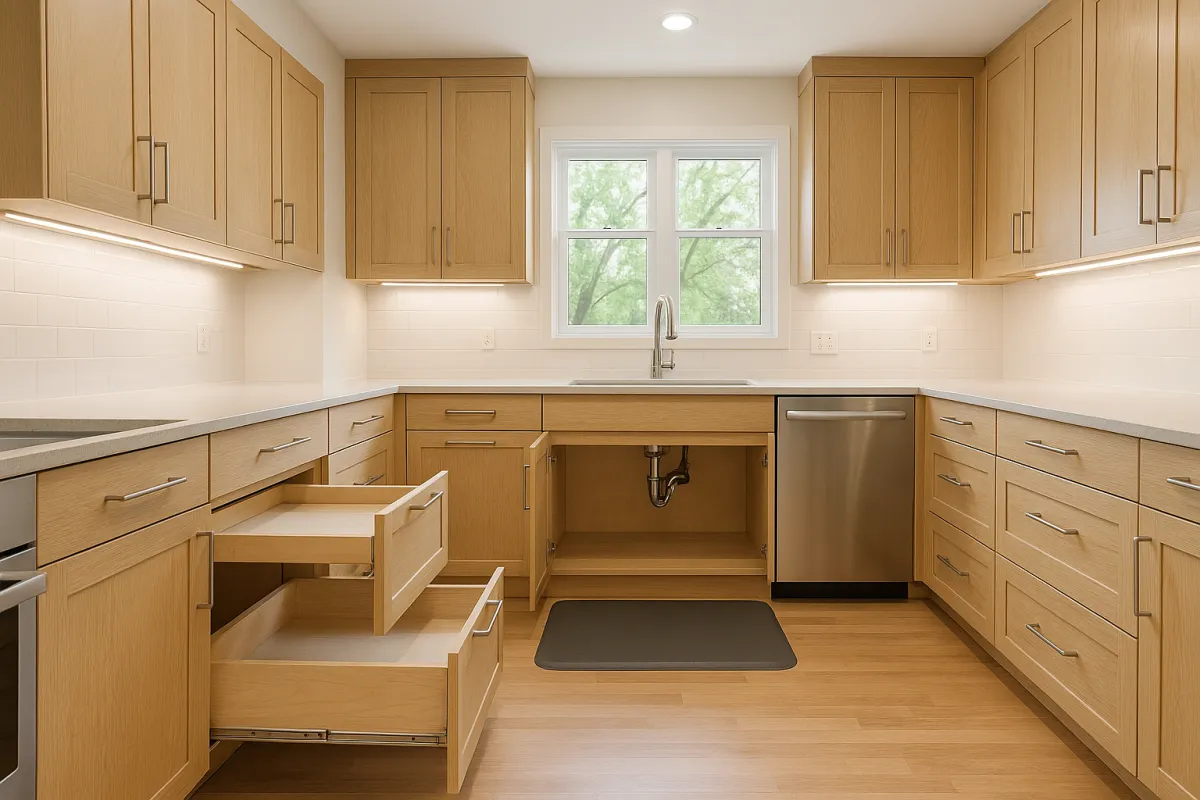
Overhead cabinets and low base cabinets both create risk -- the first from overreaching, the second from bending and crouching. Practical solutions include moving frequently used items to counter level or easily accessible mid-height shelving, installing pull-down cabinet shelves that bring upper storage to counter level, using drawer-style lower cabinets rather than traditional swing-door base cabinets, and keeping a stable step stool with a handle grip if overhead access is necessary.
Lighting
Inadequate kitchen lighting is both a safety hazard and a usability issue. Aging eyes require significantly more light than younger eyes to function safely. Improvements include under-cabinet lighting over work surfaces and the stove, night lighting along the path from the bedroom to the kitchen for nighttime trips, and bright even overhead lighting -- replacing single-bulb fixtures with multiple-point LED lighting.
Hardware and Fixtures
Small hardware changes have an outsized effect on daily usability: replacing knob-style cabinet handles with D-ring or bar pulls (easier to grip with arthritic hands), installing a single-lever faucet with a pull-out sprayer rather than two-handle traditional faucets, and adding a touchless or motion-sensor faucet to reduce the need to grip or twist.
Thinking About What It Takes to Age in Place Safely?
Circle Partners helps Minnesota families assess whether aging in place is still the right path -- or whether the time has come to explore other options. Either way, the conversation starts here.
Call or text: 763-340-2002
Book a free consultation: circlepartnersmn.com/booking
Circle Partners -- KW Real Estate Planners | 16201 90th St NE, Suite #100, Otsego, MN 55330 | [email protected]
More from the Right Size Blog
- The Complete Minnesota Home Modification Checklist for Aging in Place
- Bathroom Safety for Minnesota Seniors: Grab Bars, Walk-In Showers, and More
- First-Floor Living: How to Rethink Your Minnesota Home Layout for Age-in-Place Success
- The True Cost of Aging in Place vs. Moving to Senior Living in Minnesota