First-Floor Living: How to Rethink Your Minnesota Home Layout for Age-in-Place Success
For many Minnesota seniors, the single biggest obstacle to aging in place is the staircase. A 4-bedroom colonial with the master bedroom on the second floor was perfectly designed for a family with children. For a senior with knee pain, reduced balance, or early mobility limitations, that same staircase becomes a daily risk.
The solution for many families is not an immediate move — it is converting the home to first-floor living. This guide walks through the practical steps, costs, and decision framework for making a Minnesota home work on one level.
Is First-Floor Living Feasible in Your Parent’s Home?
Before investing in a conversion, evaluate whether the home can support first-floor living:
- Is there a room on the main floor that can serve as a bedroom? Dining rooms, dens, offices, and formal living rooms are all candidates. The room should be at least 10x12 feet for a functional bedroom.
- Is there a full bathroom on the main floor? A half bath (toilet only) is not sufficient for aging in place. If a main-floor full bath does not exist, a bathroom addition or conversion may be needed.
- Is the main floor accessible from the exterior? No-step or low-step entry, or the ability to add a ramp, is essential.
- Can laundry be relocated to the main floor? Basement laundry requires stair access that increases fall risk.
If all four of these can be addressed — either as-is or through modification — first-floor living is likely feasible.
Converting a Room to a Main-Floor Bedroom
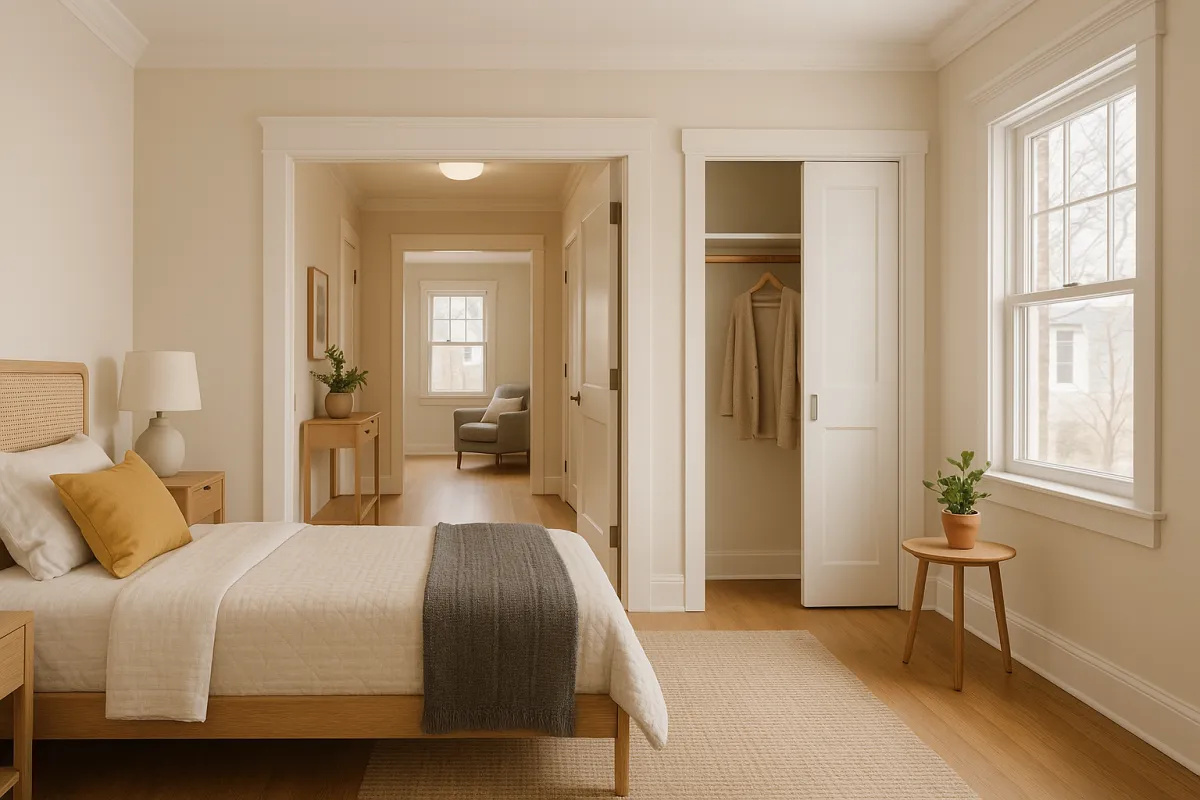
A dining room conversion is the most common first-floor bedroom solution in Minnesota homes. Most formal dining rooms are located adjacent to a main-floor full bathroom and have good natural light, adequate square footage, and access to the main living area.
Conversion typically involves:
- Removing the dining table and storage and replacing with bedroom furniture
- Adding a closet (a wardrobe or armoire works if a built-in closet is not feasible)
- Ensuring adequate lighting and a bedside outlet for a lamp and phone charger
- Adding a door if the space is currently open-plan — for privacy and quiet
- Installing a non-slip area rug or ensuring the flooring surface is safe for nighttime barefoot walking
Cost range: $500-$5,000 depending on whether a closet is added or a door is installed.
Main-Floor Bathroom: The Critical Factor
If the main floor has only a half bath or no bathroom at all, this is the most significant barrier to first-floor living. Options:
- Bathroom addition: Adding a full bathroom to the main floor typically costs $15,000-$35,000 in Minnesota
- Garage conversion: An attached garage can sometimes be converted to include a bathroom and bedroom at lower cost
- Wet room addition: Some homes can accommodate a small wet room (shower + toilet) within an existing closet or laundry space
If main-floor bathroom addition is not financially feasible, a stair lift may be a better intermediate solution while considering a longer-term rightsizing plan.
Laundry Relocation
Moving laundry to the main floor is often achievable with a stackable washer/dryer unit in a closet, mudroom, or repurposed space. Cost: $1,000-$3,000 for the appliances and any plumbing or electrical work needed.
When First-Floor Living Is a Bridge, Not a Destination
For some Minnesota seniors, first-floor living is the right solution for 3-5 years — providing safety and comfort while deferring a larger move. For others, the cost and effort of home modification is better directed toward a rightsizing move that provides better long-term value.
Use this framework to decide:
- First-floor living makes sense if: The senior is healthy and independent, modification costs are under $15,000 total, the senior wants to remain in the home for at least 5 years, and the home will sell well after the modification
- Rightsizing may be better if: Modification costs exceed $20,000, the senior is already experiencing isolation or care needs, the home has significant deferred maintenance beyond the accessibility issues, or the senior is ambivalent about staying
Related Aging-in-Place Resources
- The Complete Minnesota Home Modification Checklist for Aging in Place
- Bathroom Safety for Minnesota Seniors: Grab Bars, Walk-In Showers, and More
- How to Find a Certified Aging-in-Place Specialist (CAPS) in Minnesota
- Aging in Place vs. Senior Living in Minnesota: The Real Cost Comparison
- When Is It Time to Stop Aging in Place? Signs Minnesota Families Should Watch For
Circle Partners helps Minnesota families evaluate aging-in-place modifications alongside rightsizing and home sale planning across Wright County. Contact us today.