
Setting Up Your New Space: Making a Smaller Minnesota Home Feel Like Home Fast
One of the most common fears Minnesota seniors have about rightsizing is that a smaller home will feel cramped, impersonal, or foreign. The good news: the speed at which a new space feels like home has very little to do with square footage and almost everything to do with intentional setup in the first 48-72 hours.
This guide walks you through the priorities that matter most — the ones that create immediate comfort, safety, and the feeling of belonging.
The First 48 Hours: What Matters Most
Priority 1: Bedroom First
The bedroom sets the emotional tone for the entire space. Unpack and arrange it completely before any other room. Familiar bedding, your usual pillow, the same nightstand arrangement as before the move — these cues signal to your nervous system that you are safe and home.
Install the night light path to the bathroom before going to sleep the first night. This simple step prevents disorientation during nighttime bathroom visits in an unfamiliar layout.
Priority 2: The Kitchen Essentials
You do not need to fully unpack the kitchen on day one. Set up: coffee maker or kettle, your favorite mug, one comfortable place to sit, and the immediate necessities (plates, bowls, basic utensils). A hot drink in a familiar mug on the first morning does more for your sense of home than a fully organized kitchen.
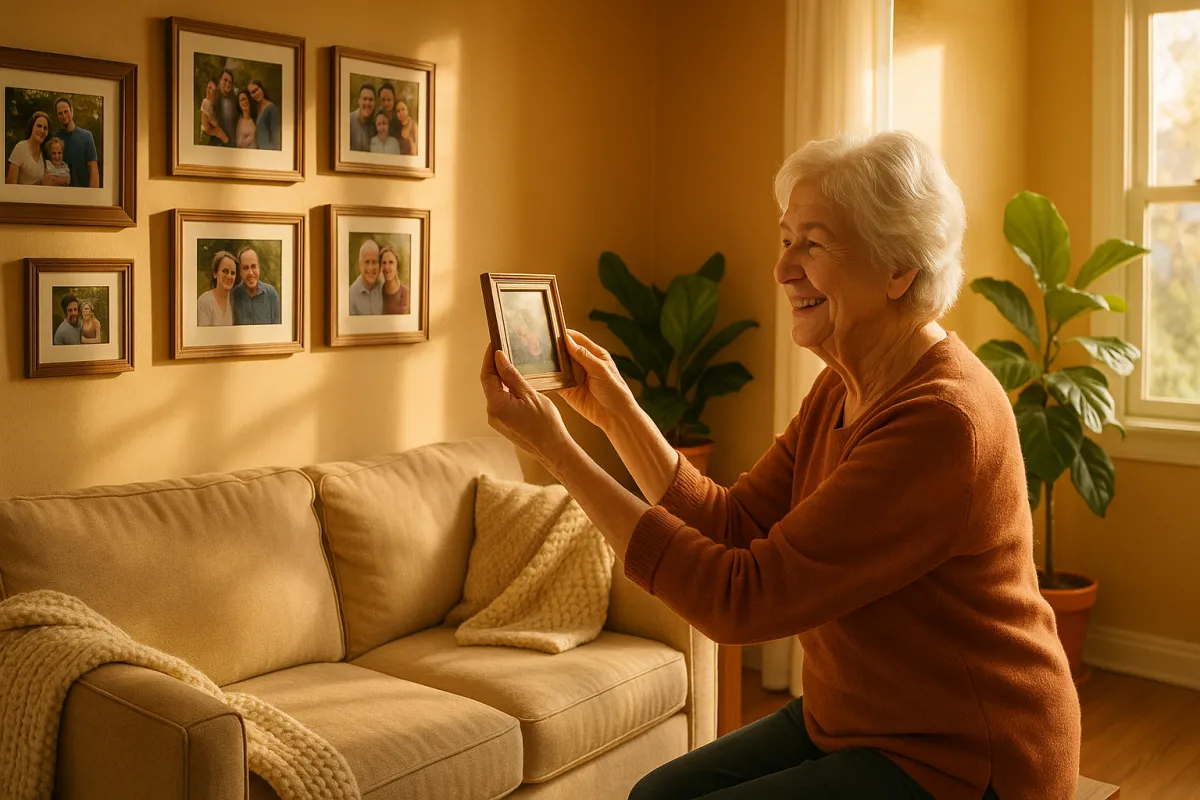
Priority 3: Hang Three Meaningful Photos
Research on home psychology consistently shows that personal photographs and artwork on walls are among the most powerful signals that a space is yours. On day one or two, hang at least three meaningful photos — family portraits, travel memories, or artwork you love. The walls go from feeling bare and institutional to feeling inhabited.
Furniture Arrangement Principles for Smaller Spaces
Prioritize Flow Over Volume
In a smaller home, clearance matters more than fitting every piece of furniture. The goal is smooth movement through the space — particularly for seniors with mobility aids. Maintain at minimum:
- 36 inches of clearance in main pathways
- 18 inches on each side of the bed
- Clear, unobstructed path from bedroom to bathroom
Create a Clear Focal Point in Each Room
In a smaller living room, anchor the space around one focal point (TV, fireplace, or window view) rather than trying to accommodate multiple seating areas. This prevents the room from feeling cluttered and creates a sense of intentional design rather than leftover furniture.
Let Go of Pieces That Do Not Fit
One of the most common mistakes in a right-sizing move is forcing furniture that worked in a larger home into a smaller space. If a piece makes the room feel crowded, it is better to donate it and replace it later (if needed) than to sacrifice the comfort and flow of the room you will live in every day.
Lighting: The Underestimated Factor
Lighting has an enormous impact on how a space feels — and seniors need more light than younger adults to see comfortably. In the first week:
- Evaluate natural light in each room at different times of day
- Add floor or table lamps in areas that feel dim
- Install LED bulbs with warm color temperature (2700-3000K) for a cozy, home-like feel
- Ensure the kitchen and bathroom have bright, shadow-free task lighting
Recreating Familiar Routines in a New Space
Home is less about a place and more about a pattern. Your morning coffee spot, your reading chair by the window, your evening walk route — these routines make a space feel lived-in faster than any amount of decorating.
In the first week, intentionally recreate the rhythms of your previous home in the new space:
- Designate a reading chair or morning spot and use it every day
- Establish the same meal schedule and cooking routines
- Find an equivalent outdoor space for your regular walking route
- Maintain your social commitments from the week before the move
When the New Space Still Does Not Feel Like Home at 30 Days
Some adjustment is normal. If at 30 days the space still feels foreign or uncomfortable, consider whether specific physical elements need adjustment (furniture rearrangement, more lighting, a plant or two) or whether the emotional adjustment needs more support (a conversation with family, a counselor, or increased social activity).
Related Home Moves Resources
- Your First 30 Days in Your New Minnesota Home: A Senior Transition Checklist
- The Minnesota Senior Move Checklist: 90 Days Before to Move-In Day
- Moving Safely: How Minnesota Seniors Can Protect Their Health During a Move
- The Emotional Side of Moving: Supporting Your Minnesota Parent Through the Transition
- The Administrative Checklist for Minnesota Seniors Who Are Moving
Circle Partners helps Minnesota seniors and families navigate the full rightsizing journey, including making their new space feel like home. Contact us today.