
The Long-Distance Rightsizing: How One Minnesota Family Coordinated a Move from 2,000 Miles Away
When Sarah called from Phoenix, she was doing math in her head. Flight from Phoenix to Minneapolis: four hours. Time she could take off work: limited. Her brother Tom lived 40 minutes from their mother Diane's Big Lake home, but Tom was managing a small business and two teenagers. Neither of them felt capable of handling what they both knew needed to happen.
Diane, 80, had fallen twice in the past year. Nothing serious -- both times she caught herself. But her physical therapist had said plainly that the split-level she had lived in for 32 years was now a risk. Stairs to the bedroom. Stairs to the laundry. A yard that required upkeep she could no longer safely manage.
"We knew the conversation had to happen," Sarah said. "We just couldn't figure out how to be the ones to do it from this distance."
The Problem With Long-Distance Oversight
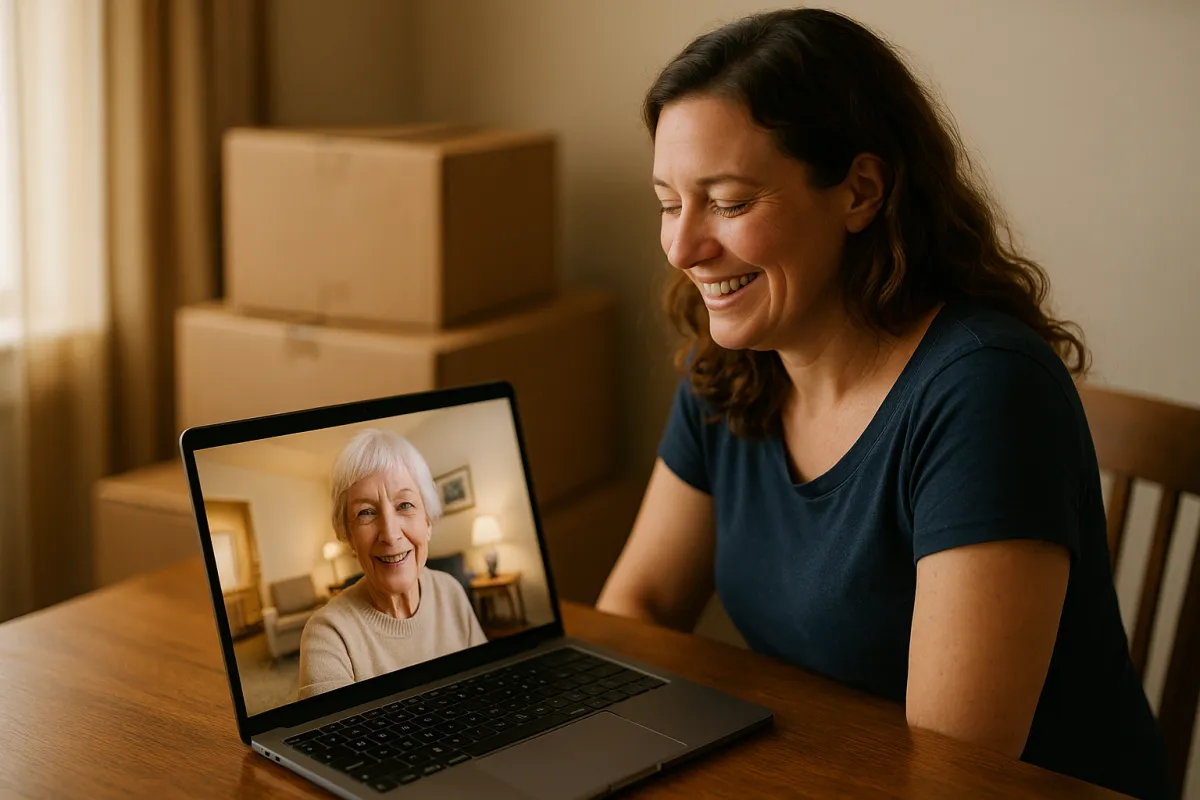
For families where adult children live in different states, rightsizing carries a particular weight. The parent lives in Minnesota; the children live everywhere else. Visits are short. Video calls can't tell you whether the mail has been piling up or whether a parent seems less steady on their feet than they did six months ago.
Sarah could see the situation from 2,000 miles away -- which is to say, she could not see it clearly at all. She was working from Diane's descriptions, from Tom's intermittent updates, and from her own worry. None of those things was a plan.
Getting the Right Help in Place
Tom found Circle Partners through a neighbor who had gone through a similar process the year before. What the family needed wasn't just a real estate agent -- they needed someone who could coordinate the full picture: the home sale, the search for a new living situation, and the logistics of a move that neither sibling could be physically present to manage day-to-day.
"Having a local professional who understood what needed to happen in sequence was the thing that made everything else possible," Tom said. "I wasn't trying to figure out what came first anymore. That had been the problem -- I kept trying to manage everything and doing none of it well."
The team assembled around Diane included a senior move manager who met with her twice before the move to begin sorting belongings at her pace, a real estate professional who prepared the Big Lake house for market, and a care coordinator at the independent living community in Buffalo where Diane ultimately chose to move.
How Sarah Stayed Involved From Phoenix
Sarah could not be in Minnesota for most of the process. But she was not absent from it.
Weekly video calls with Diane, Tom, and the senior move manager kept her informed and involved in every major decision. The move manager created a shared folder with photos of each room, updates on what was being kept, donated, or sold, and notes from each sorting session. Sarah could give input on specific items -- including the set of china that she and Tom both cared about -- without having to be in the room.
"I cried on one of those video calls," Sarah said. "Seeing my mom's kitchen being carefully sorted, knowing I wasn't there -- that was hard. But the move manager handled it with such gentleness. She treated everything like it mattered, because to Mom, it did."
Sarah flew in for move-in day. She was there when Diane walked into her new apartment in Buffalo for the first time, saw her furniture arranged as she had requested, her family photos already on the walls, her coffee maker on the kitchen counter.
"She walked in and said, 'Oh, it looks like me,'" Sarah said. "That was all I needed to hear."
Six Months Later
Diane has been in her new community for six months. She has a standing Tuesday lunch with two women she met in the first week. She attends the community's Thursday afternoon book club. She no longer worries about the stairs, the furnace, or the yard.
Sarah visits twice a year and describes each visit as categorically different from what visits to the Big Lake house had become. "Before, every visit was partly a wellness check," she said. "Now it's just spending time with my mother. That shift has meant everything to me."
Tom stops by on weekends. He stays for dinner. He is no longer the emergency contact bracing for a crisis -- he is simply a son who lives nearby.
What the Family Would Tell Long-Distance Families
- Distance is not the obstacle -- coordination is. With the right local team in place, long-distance families can participate meaningfully without being physically present for every step.
- Technology closes the gap. Video calls, shared photo folders, and digital documents make it possible for out-of-state family members to stay genuinely involved in every decision.
- Your parent still leads. Even when family members are coordinating from across the country, the parent's preferences and pace should drive the process. Remote coordination doesn't mean remote control.
- Show up for what matters most. Sarah couldn't be there for every sorting session. She was there for move-in day. Choose the moments that matter and be fully present for them.
We Coordinate the Whole Process -- Wherever You Are
Circle Partners works with Minnesota families navigating rightsizing, whether they're next door or across the country. If you're managing this from a distance, we can be your trusted, experienced team on the ground in Wright County and the Twin Cities metro.
Call or text: 763-340-2002
Book a free consultation: circlepartnersmn.com/booking
Circle Partners -- KW Real Estate Planners | 16201 90th St NE, Suite #100, Otsego, MN 55330 | [email protected]
This story is a composite narrative drawn from real rightsizing experiences in the Big Lake and Wright County area. Names and identifying details have been changed to protect family privacy.