
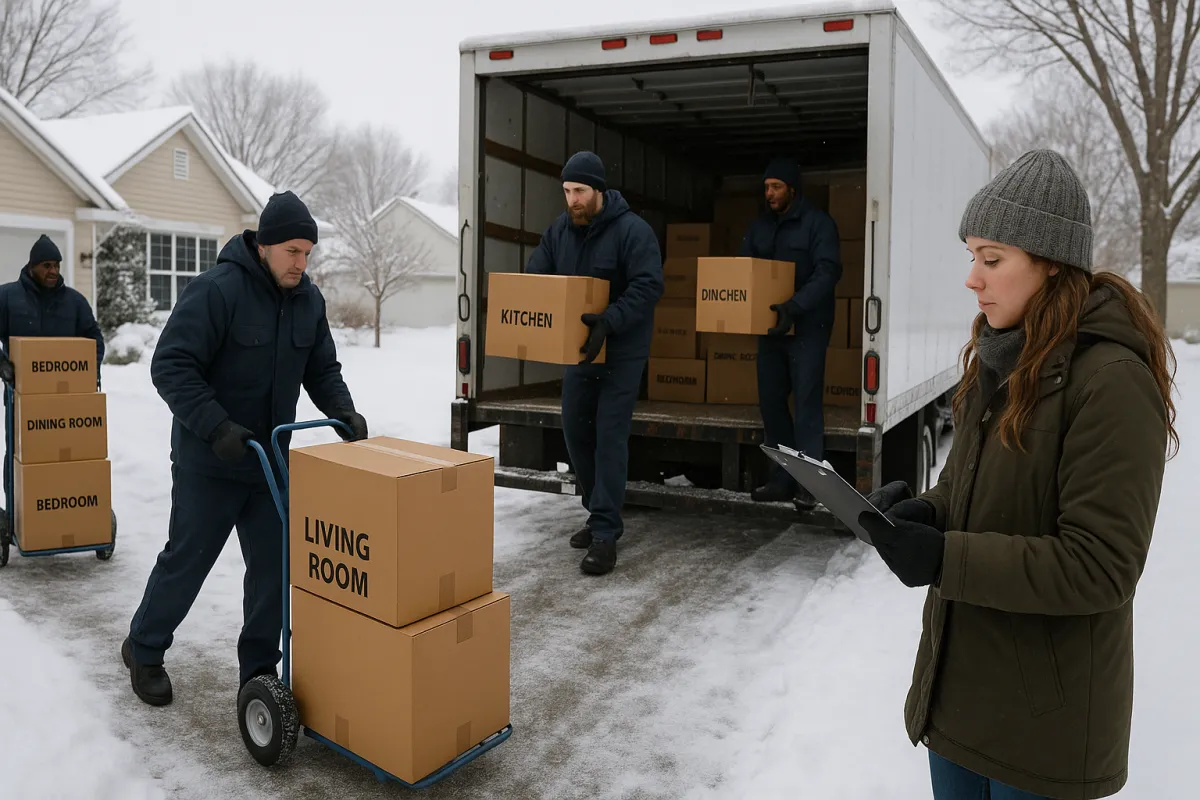
Moving in Minnesota Winter: What Seniors and Families Need to Know
Minnesota winters are no joke — and moving during them requires specific planning that most general moving guides do not address. Seniors moving in November through March face unique challenges: icy pathways, frozen ground, heating gaps between homes, and the physical demands of cold-weather exertion. This guide covers what to know before scheduling a Minnesota winter move.
Why Some Families Choose Winter Moves
Despite the challenges, winter moves have real advantages for Minnesota seniors:
- Lower moving company rates: Winter is off-peak season. Most Minnesota moving companies offer 10-25% lower rates from November through March.
- Better availability: You can often get your preferred moving date and crew rather than competing with the spring and summer rush.
- Faster home sales: Sellers in winter face less competition. Buyers are more serious. Winter listings in Wright County often close faster than spring listings.
- No summer heat stress: For seniors prone to heat sensitivity, a cold-weather move eliminates heat-related health risks during the physically demanding move day.
The Core Winter Moving Challenges
Ice and Slip Hazards
The greatest safety risk on Minnesota winter move day is slip-and-fall injuries. Movers, seniors, and family members are all at risk. Address this proactively:
- Apply ice melt or sand to all walkways, steps, and the path from door to moving truck at least one hour before movers arrive
- Lay rubber-backed runner mats inside both homes for wet/muddy boots
- Have movers use floor protection throughout the home — both to protect floors and to reduce tracking
- Seniors should not be on outdoor walkways during the active move. Assign a family member to accompany them and arrange seating inside.
Heating and Utility Timing
One of the most common winter move mistakes is a heating gap. Plan this carefully:
- Do not cancel heating at the old home until you are fully moved out and the home is inspected
- Ensure heating is active at the new home at least 24 hours before move-in — this matters for protecting pipes as well as comfort
- Keep the new home at a minimum of 65 degrees during the move even if the exterior doors are opening frequently
- Know the location of the water shut-off in both homes in case of a pipe issue during the move
Protecting Belongings in Cold Weather
- Electronics: Do not move computers, TVs, and electronics from a cold truck directly into a warm home. Let them acclimate at room temperature for 2-3 hours before powering on.
- Wood furniture: Extreme cold can cause wood to crack or joints to loosen. Use moving blankets generously and keep furniture away from heating vents immediately after arrival.
- Plants: Most houseplants cannot survive exposure to Minnesota winter temperatures even briefly. Wrap them and transport in a heated personal vehicle, not the moving truck.
Truck Access in Snow
- Confirm the driveway and street in front of both homes can accommodate a moving truck. Narrow roads with snow banks may require a smaller truck or shuttle approach.
- Arrange snow removal at both homes the morning of the move if snow is forecast
- Have a backup plan if conditions become unsafe. Professional movers can reschedule — build a flexible 2-3 day window into your timeline if possible.
What to Ask Your Moving Company About Winter Moves
- Do you have experience with winter moves in Wright County and the Twin Cities metro?
- What is your inclement weather policy? What happens if conditions are unsafe on move day?
- Do you provide floor protection and ice melt as standard, or are these extras?
- Do you use heated trucks? (Important for electronics and temperature-sensitive items)
- What is your rebooking policy if we need to delay due to weather?
Planning Your Winter Move Timeline
- December-February: Peak winter risk months. Allow maximum flexibility and build in a weather delay buffer of 2-3 days.
- November and March: Transition months. Weather is variable — some days are perfect, some are not. Same buffer applies.
- Mid-week moves: Weather systems in Minnesota often move through over weekends. Mid-week moves (Tuesday-Thursday) historically have better odds of clear conditions.
Related Home Moves Resources
- The Minnesota Senior Move Checklist: 90 Days Before to Move-In Day
- How to Hire a Senior-Friendly Moving Company in Minnesota
- Moving Safely: How Minnesota Seniors Can Protect Their Health During a Move
- Your First 30 Days in Your New Minnesota Home: A Senior Transition Checklist
- Senior Move Managers in Wright County: What They Do and Why You Need One
Circle Partners coordinates Minnesota senior moves year-round, including winter transitions across Wright County. Contact us today for a no-obligation consultation.