How to Have the Heirloom Conversation Without the Family Drama
Of all the conversations that happen during a Minnesota rightsizing move, the heirloom conversation is often the most emotionally charged. Who gets the dining room table where every family holiday was hosted? Who inherits the jewelry collection? What happens to the vintage workshop tools or the family car?
When handled thoughtfully, the heirloom conversation becomes a beautiful act of family storytelling and legacy-passing. When handled poorly, it creates resentments that last years. This guide gives you the framework to do it right.
Before the Conversation: Set the Right Foundation
Let the Senior Lead
The heirloom conversation should be driven by the senior, not managed around them. Your parent has opinions about who should receive what, and those opinions matter deeply. Start by asking, not telling.
Timing Matters
Have this conversation early in the rightsizing process, before the estate sale is scheduled, before items are donated, and ideally while the senior is in good health and spirits. A rushed conversation under deadline pressure produces poor outcomes.
Set the Right Physical Environment
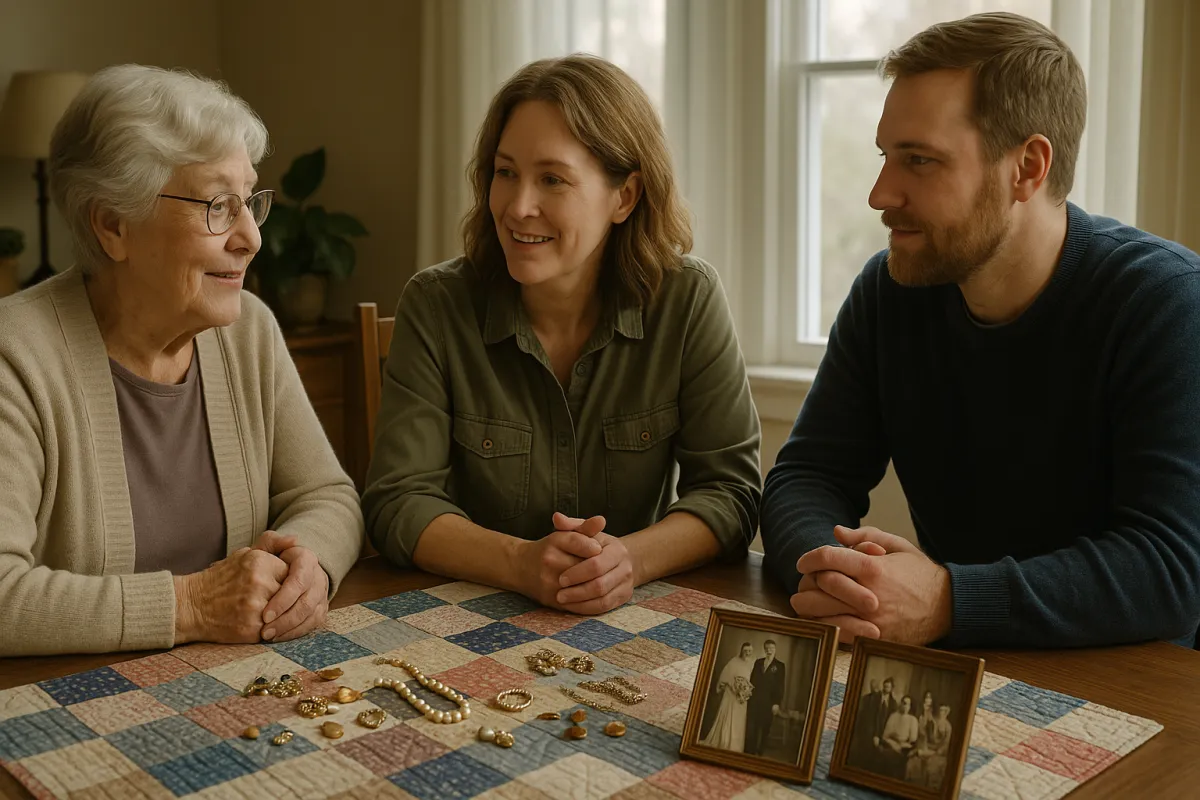
Gather family around the dining table, not over video call if it can be avoided. Have the items present if possible. A warm, unhurried setting produces better conversations than a sterile phone call.
How to Start the Conversation
The opening framing sets the entire tone. Suggested approaches:
For the senior to say to the family: I want to make sure the things that matter most to me end up with the people who will cherish them. I thought we could talk about it together while I can be part of that.
For an adult child to say to a parent: Mom, we know how much these things mean to you. We want to make sure they go to the right people. Can you tell us the stories behind some of them?
Notice what both openings share: the focus is on meaning, stories, and legacy, not on who gets what.
The Story-First Method
Before assigning any item to any person, hear the senior tell the story of that item. Where did it come from? Who gave it? What memory does it hold? This serves two purposes:
- It creates a record of the family history tied to each object, invaluable for whoever receives it
- It shifts the conversation from ownership to stewardship. Family members are receiving a piece of history to care for, not a prize to win
A Fair Process for Disputed Items
When multiple family members want the same item, avoid making the senior choose between children. Instead, try these structured approaches:
The Wish List Method: Each family member independently writes their top 10-15 desired items. Items with no conflict go immediately to the person who listed them. Items with conflicts are discussed openly.
The Bid-Out Method: For contested items with monetary value, family members write what they would pay to receive it. The highest bidder pays the other interested parties their share. Everyone receives fair compensation and one person receives the item.
The Alternating Selection Method: Siblings take turns selecting items. Each selection is honored without renegotiation.
What NOT to Do
- Do not make promises to individual family members before a family conversation has happened
- Do not assume equal division of monetary value equals emotional fairness
- Do not exclude out-of-state or less-involved family members from the conversation
- Do not rush the process to meet an estate sale deadline. Schedule the conversation first, then the sale
- Do not let the senior feel their belongings are being taken rather than cherished
Documenting the Decisions
After the heirloom conversation, create a simple written record of who is receiving what. This prevents misremembering and provides clarity if family dynamics become complicated. A simple email summary to all family members immediately after the meeting works well.
More in Our Personal Treasures Series
- The Keep, Gift, Sell, Donate Method: How Minnesota Families Sort Belongings Without Fighting
- What to Do with a Lifetime of Belongings: The Minnesota Senior Rightsizing Guide
- Finding the Value in What You Own: Appraisals and Assessments for Minnesota Seniors
- Preserving Family History: How to Digitize Photos, Letters, and Memories in Minnesota
- Gifting with Intention: How to Pass Down Heirlooms Before Your Minnesota Move
- Estate Sales, Online Auctions, and Donation: What Works Best for Minnesota Families
Circle Partners helps Minnesota families navigate every dimension of the rightsizing process, including the conversations that matter most. Reach out today for a no-obligation consultation.